Stop Breaches of Information Barriers with Prevent
The impact of breaching information barriers
Client churn
Clients will leave firms that are unable to preserve their confidentiality
Financial losses
Ceasing operations and client churn causes revenue losses
Non-compliance
Breaching regulations leads to further financial losses and reputational damage
Static email data loss prevention can’t effectively preserve information barriers
Organizations need to control internal email communications between employees to prevent conflicts of interest that can lead to severe operational inefficiencies, damaged client relationships, and financial losses.
The static, rules-based email data loss prevention (DLP) offered by Microsoft 365 and secure email gateways (SEGs) is unable to scale to meet the modern enterprise needs. It requires too much administrative overhead to maintain DLP policies, such as when working with multiple clients with similar names. Static DLP is also unable to understand the context in which individuals share information to dynamically prevent emerging risks.
Organizations such as brokerages can be required to cease operations every time an information barrier is breached.
Enforcing information barriers in email
KnowBe4 Prevent uses both supervised and unsupervised machine learning technology to dynamically analyzes risk and uphold information barriers in real-time.
As part of the Outlook Add-in and combined with our gateway infrastructure, we enforce information barriers and ethical walls within an organization based on system administrators’ customizable parameters. Keywords, terms, and policies are dynamically managed and synchronized with existing systems and data sources within the organization.
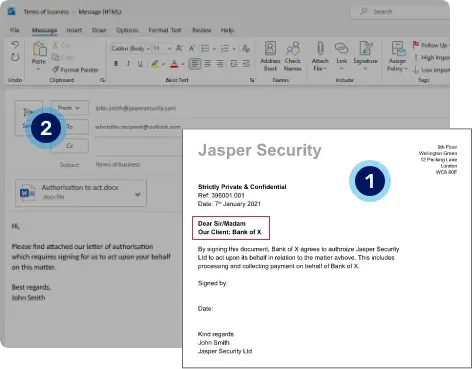
Intelligent email DLP that upholds information barriers
1. Content analysis for sensitive or identifiable data. Customizable policies scan the subject line, message body, and attachments for sensitive data such as client names, project titles, accounting information, or other specified keywords and expressions.
2. Recipient analysis, including domain. Our technology interrogates both the recipient and their domain to detect any potential breach or conflict of interest.

"We detect and warn staff on [data] exfiltration attempt from sending emails to their personal accounts."
Mahesh Belagali, Information Technology Security Manager, Wotton+Kearney
Dynamic alerts that offer clear explanations of risk
3. Dynamic alerts correct sender behavior in real time. Senders who try to breach information barriers are presented with a clearly worded prompt that explains why content shouldn't be sent to the recipient. Sending can be blocked entirely based on your organizational policies.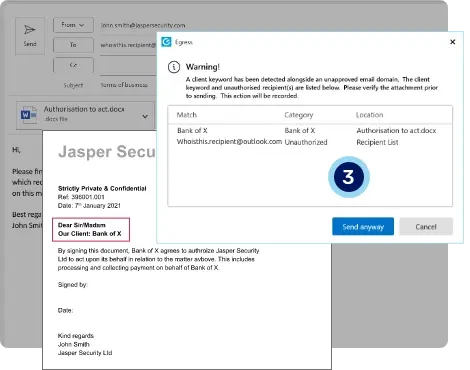
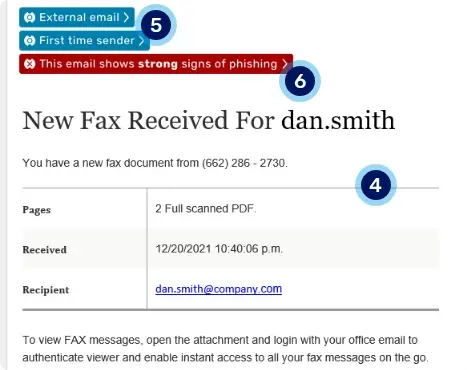
Intelligent technology that's easy for users to understand
4. Linguistic analysis reveals anomalous content. Email structure and copy identifies it as a fax receipt notification, but this is the first time the recipient has received one.5. Blue alerts highlight the email's origins. Our blue banners let the recipient know they've received an external email from a new contact. Based on our analysis, a red warning is also added.
6. Red warning banner alerts user to real-time risk. As Defend has identified the email as a phish with a malicious payload, a red warning banner is dynamically added to alert the user.
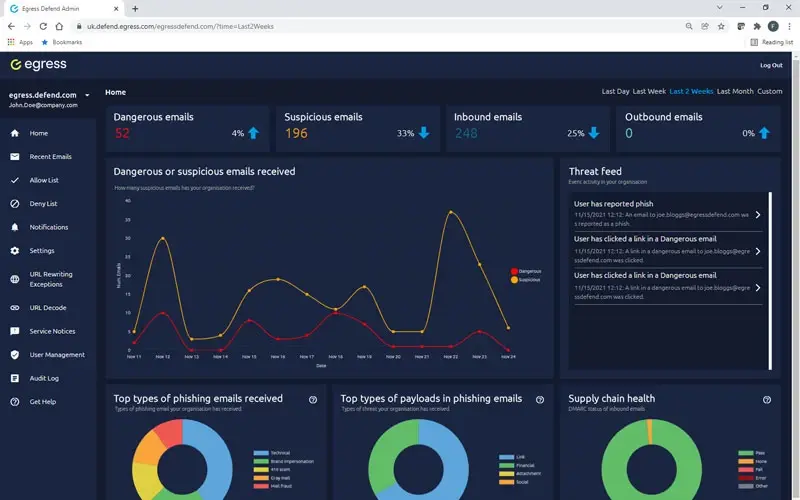
Cut through the noise to highlight the risks that matter
Reporting on risks such as breach of information barriers in your email flows can be manual and slow. Even worse, systems can throw too much unnecessary information at you, making it harder to make timely and effective decisions.
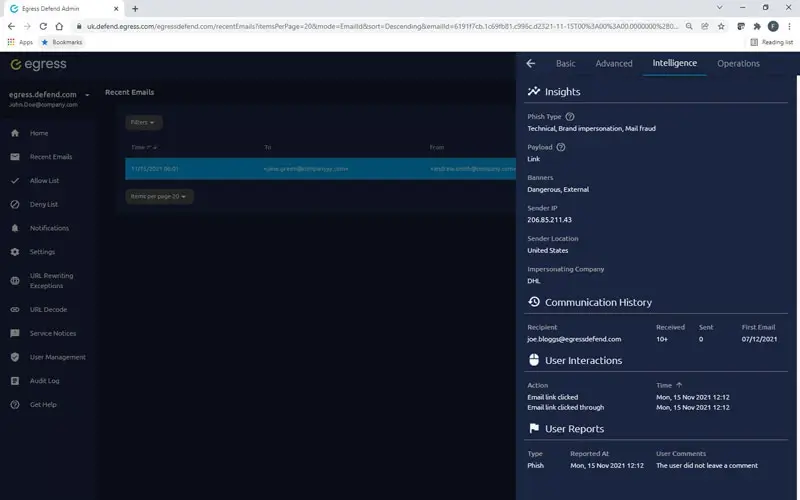
KnowBe4's intelligence platform provides simplified dashboards and critical insights so that administrators can quickly cut through the noise, identify email security risks, and, where necessary, remediate them.
Actionable insights
Data and analytics should not overwhelm you with information. Updated in real time, our intelligence dashboard offers insights and statistics into email details, risk levels, authentication checks, communication history, and how your people interacted with Prevent prompts.